
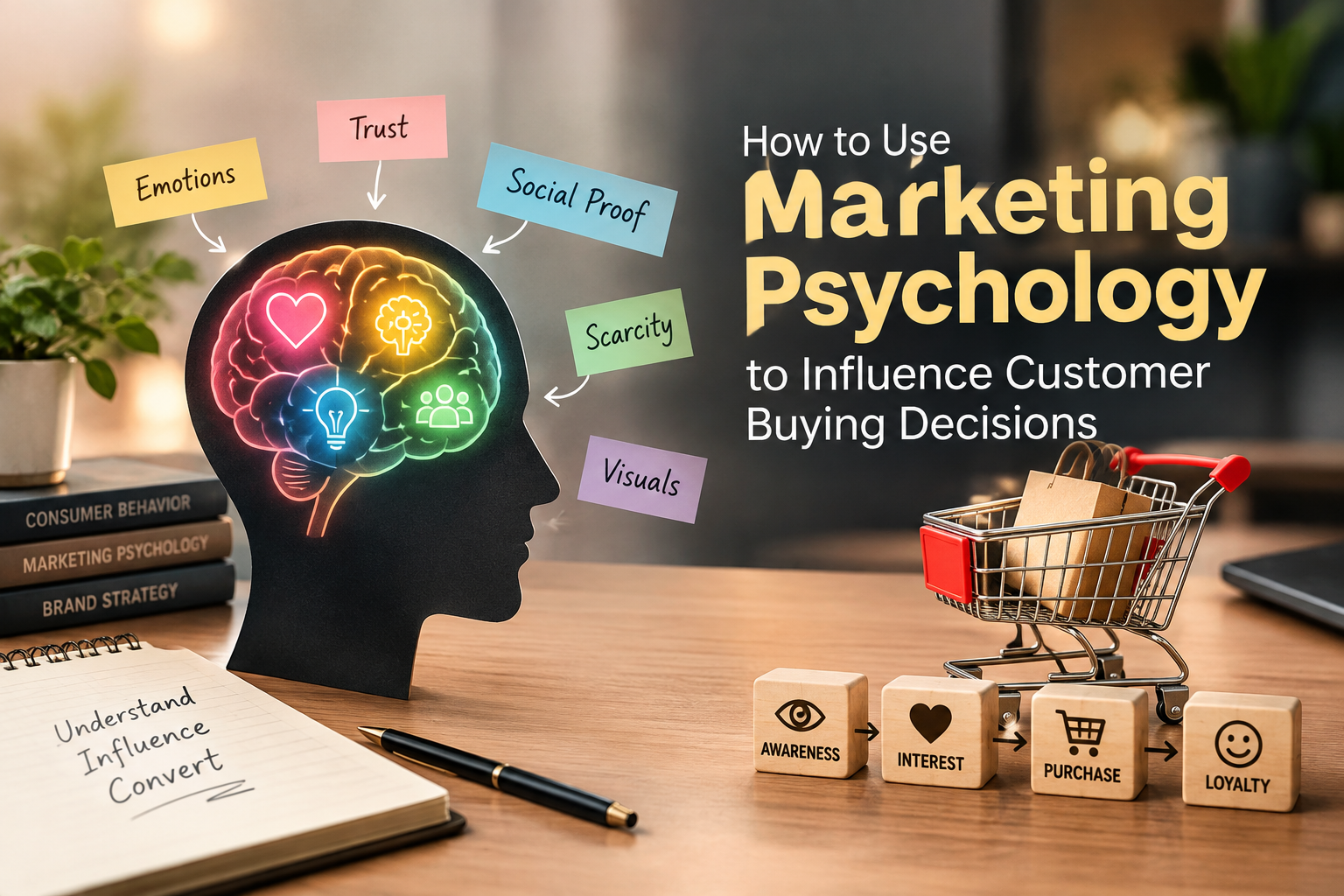
Every day, consumers are bombarded with thousands of marketing messages. Despite believing that their purchasing choices are guided by rational logic and detailed feature comparisons, Nobel Prize–winning research reveals a different reality: up to 95% of consumer purchasing decisions are made subconsciously.
Marketing Agency Singapore
Human brains rely on mental shortcuts—known in behavioral economics as cognitive biases—to conserve mental energy and make fast decisions under uncertainty. Marketing psychology (or neuromarketing) is the strategic application of these behavioral insights to design frictionless, high-converting customer journeys.
Marketing Agency Singapore+ 1
When applied ethically, marketing psychology does not manipulate; rather, it removes decision fatigue, establishes trust, and highlights value in ways that align naturally with human cognition.
Better Marketing 101
1. The Foundation: Dual-Process Theory (System 1 vs. System 2)
To influence consumer behavior effectively, you must understand how the human mind processes information. Psychologist Daniel Kahneman categorized human thought into two systems:
Marketing Agency Singapore
                     ┌────────────────────────────────────────┐
                     │    HUMAN DECISION-MAKING PROCESS      │
                     └───────────────────┬────────────────────┘
                                         │
                   ┌─────────────────────┴─────────────────────┐
                   ▼                                           ▼
         [ System 1 Thinking ]                       [ System 2 Thinking ]
    • Fast, automatic, emotional                • Slow, deliberate, logical
    • Driven by instincts & gut feelings        • Analyzes specs & spreadsheets
    • Drives 95% of buying choices              • Activated mainly to justify decisions
- System 1 (Fast & Intuitive): Operates automatically, emotionally, and with little to no conscious effort. It responds to colors, visual cues, social pressure, and immediate threats or gains.
- System 2 (Slow & Analytical): Operates deliberately, logically, and with significant effort. It evaluates complex spreadsheets, compares long lists of specifications, and calculates precise ROI.
Marketing Application: Most marketers write copy for System 2, listing extensive technical specifications and logical arguments. However, System 1 makes the initial decision to buy, while System 2 merely steps in later to justify the purchase. Effective campaigns target System 1 with strong visuals, emotional hooks, and clear value statements before giving System 2 the facts needed to rationalize the transaction.
Marketing Agency Singapore
2. Core Psychological Principles in Pricing and Choice
Pricing is rarely an evaluation of absolute math; it is almost entirely an evaluation of relative perception.
A. The Anchoring Effect
The Anchoring Effect occurs when individuals rely heavily on the first piece of information presented to them (the “anchor”) as a reference point for all subsequent judgments.
Marketing Agency Singapore
- Execution: Always present a higher price before showing the actual price.
- Example: Displaying $199 crossed out right next to ~~$499~~ anchors the buyer’s brain to a $500 valuation. The $199 price point suddenly feels like an undeniable bargain rather than a significant expense.
- SaaS Strategy: Presenting a “Per Year (billed annually at $12/mo)” option alongside a “$15/mo billed monthly” option anchors value and drives annual commitment.
B. The Decoy Effect (Asymmetric Dominance)
When consumers are presented with two options, choosing between them can trigger decision paralysis. Introducing a third, deliberately asymmetrical option—a decoy—dramatically shifts preference toward the higher-value item.
Better Marketing 101
┌────────────────────────────────────────────────────────────────────────┐
│                        THE DECOY EFFECT IN ACTION                      │
├───────────────────┬──────────────────────┬─────────────────────────────┤
│      Option A     │   Option B (Decoy)   │      Option C (Target)     │
├───────────────────┼──────────────────────┼─────────────────────────────┤
│  Small Popcorn    │    Medium Popcorn    │        Large Popcorn        │
│       $3.00       │        $6.50         │            $7.00            │
│  (Basic Value)    │    (Poor Value)      │      (Perceived Value)      │
└───────────────────┴──────────────────────┴─────────────────────────────┘
  Outcome: Option B makes Option C look like a steal for just $0.50 more!
- Execution: Place a middle tier that costs nearly as much as the top tier but offers significantly fewer features.
- Impact: The decoy highlights the superior value of your target product, making the decision feel effortless and logical.
C. The Paradox of Choice & Decision Fatigue
Offering too many choices can lead to “choice overload,” causing action paralysis where buyers leave without buying anything.
Better Marketing 101
- Execution: Streamline your product lines and checkout paths.
- Strategy: Use “Most Popular” or “Recommended for You” badges to give customers an effortless starting point. Limit primary Call-to-Actions (CTAs) to one per page.
3. Social Influence and Trust Triggers
Humans are social animals who look to others to determine the correct action when uncertain—a phenomenon known as Social Proof.
Marketing Agency Singapore
                     ┌────────────────────────────────────────┐
                     │     TYPES OF SOCIAL PROOF IN ROI       │
                     └───────────────────┬────────────────────┘
                                         │
       ┌──────────────────┬──────────────┴───────┬──────────────────┐
       ▼                  ▼                      ▼                  ▼
[ Customer Reviews ] [ User Numbers ]     [ Industry Badges ] [ Real-Time Cues ]
  • Star Ratings       • "10k+ Marketers"   • Media Logos       • "John bought..."
  • Case Studies       • Active Members     • Certifications    • Low Stock Alerts
A. Specificity in Social Proof
Generic claims like “Thousands of Happy Customers” no longer hold persuasion weight. Specificity creates authenticity.
SUE Behavioural Design Academy
- Low Impact: “Over 10,000 users trust our software!”
- High Impact: “Joined by 14,230 growth marketers last week to save an average of 4.2 hours per week.”
B. The Principle of Reciprocity
Coined by Dr. Robert Cialdini, Reciprocity states that when you give someone a valuable favor first, they feel an innate psychological obligation to return the favor.
MasterClass
- Tactics:
- Free tools, calculators, or comprehensive guides given without gating.
- Free, high-value samples shipped to high-intent leads.
- Exceptional, unprompted customer service interactions.
C. The Authority Principle
Consumers default to trusting recognized experts, industry figures, or established institutions.
- Execution: Feature endorsements, certifications, trust seals (e.g., SSL, ISO), press logos (“As Featured In”), and official partner badges prominently on landing pages.
4. Urgency, Scarcity, and Loss Aversion
Losses loom larger than gains. Behavioral research proves that the pain of losing something is twice as powerful as the pleasure of gaining an equivalent item.
Marketing Agency Singapore
                       ┌────────────────────────────────────┐
                       │   PROSPECT THEORY: LOSS AVERSION   │
                       └─────────────────┬──────────────────┘
                                         │
                   ┌─────────────────────┴─────────────────────┐
                   ▼                                           ▼
          [ Gain Perception ]                         [ Loss Perception ]
         • "Save $100 per year"                    • "Stop losing $100/year"
         • Moderate emotional pull                 • 2x Psychological impact
A. Loss-Framed Copywriting
Reframe your feature benefits from what customers stand to gain to what they stand to lose or miss out on if they do not act.
SUE Behavioural Design Academy
- Gain Framing: “Subscribe today to gain 20% efficiency.”
- Loss Framing: “Stop losing 8 hours every week to manual data entry.”
B. Genuine Scarcity vs. Urgency
- Scarcity (Quantity-based): Highlighting limited availability (“Only 3 items left in stock”) triggers fear of missing out (FOMO) and boosts perceived value. Marketing Agency Singapore
- Urgency (Time-based): Setting strict, ticking deadlines (“Discount expires in 02:14:55”) accelerates decision-making.
⚠️ Ethical Guardrail: Artificial scarcity (e.g., fake countdown timers that reset on refresh) erodes trust permanently when discovered. Always tie urgency and scarcity to real stock numbers and genuine promotional windows.
SUE Behavioural Design Academy
5. Frictionless Action and Neuromarketing Tactics
Converting intent into action requires minimizing cognitive friction—the mental effort required to complete a task.
SUE Behavioural Design Academy
A. The Law of Least Effort
If there are multiple ways to achieve a goal, humans naturally select the path that requires the least effort.
- Checkout Optimization: Eliminate redundant form fields, allow guest checkouts, offer 1-click payment methods (Apple Pay, Google Pay), and save cart states. SUE Behavioural Design Academy
- Default Options: Set preferred settings as defaults (e.g., pre-selecting annual billing or recommended add-ons) to leverage user inertia.
B. Color Psychology and Visual Priming
Colors trigger automatic subconscious emotional responses:
| Color | Psychological Trigger | Ideal Industry / Use Case |
|---|---|---|
| Blue | Trust, Security, Stability | Finance, Healthcare, Tech |
| Red | Urgency, Excitement, Passion | Clearance Sales, Food, Entertainment |
| Green | Growth, Health, Wealth | Finance, Eco-friendly, Wellness |
| Black/Gold | Luxury, Premium Quality, Prestige | High-end Fashion, Automotive, Luxury Goods |
C. The Peak-End Rule
Customers judge an experience based on how they felt at its peak (the most intense moment) and at its end—not on the average of every moment.
- Strategy: Invest heavily in the post-purchase experience. Sending an unexpected free bonus, a personalized thank-you note, or an enjoyable onboarding video leaves a lasting high note that drives word-of-mouth and retention. SUE Behavioural Design Academy
6. Channel-Wise Implementation Plan
Here is how to deploy these psychological principles across your primary marketing channels:
┌────────────────────────────────────────────────────────────────────────┐
│                   MARKETING PSYCHOLOGY IMPLEMENTATION                   │
├─────────────────┬──────────────────────────────────────────────────────┤
│ Landing Pages   │ • Place high visual anchors above the fold.          │
│                 │ • Single primary CTA to eliminate choice fatigue.    │
│                 │ • Dynamic social proof widgets.                      │
├─────────────────┼──────────────────────────────────────────────────────┤
│ Email Campaigns │ • Subject lines built on Curiosity Gaps.             │
│                 │ • Loss-framed body copy ("Don't miss...").           │
│                 │ • Countdown timers for true flash sales.             │
├─────────────────┼──────────────────────────────────────────────────────┤
│ Paid Ads        │ • Authority badges and high-contrast visuals.        │
│                 │ • Before/After transformation framing.               │
│                 │ • Specific numeric outcomes in headlines.            │
└─────────────────┴──────────────────────────────────────────────────────┘
Summary Checklist for Marketers
- Target System 1 First: Lead with emotional benefits and clean visuals before presenting detailed technical specifications.
- Anchor Your Prices: Always show a higher original reference price before revealing discounted rates. Marketing Agency Singapore
- Use Decoy Pricing: Frame your core product next to a slightly cheaper but significantly inferior alternative.
- Specific Social Proof: Replace vague statistics with precise numbers, names, and concrete customer outcomes. SUE Behavioural Design Academy
- Frame for Loss Aversion: Highlight what customers miss out on by not taking action.
- Eliminate Conversion Friction: Remove extra form fields and simplify checkout to the bare minimum. SUE Behavioural Design Academy
- End on a High Note: Use the Peak-End rule to delight buyers after they purchase. SUE Behavioural Design Academy