
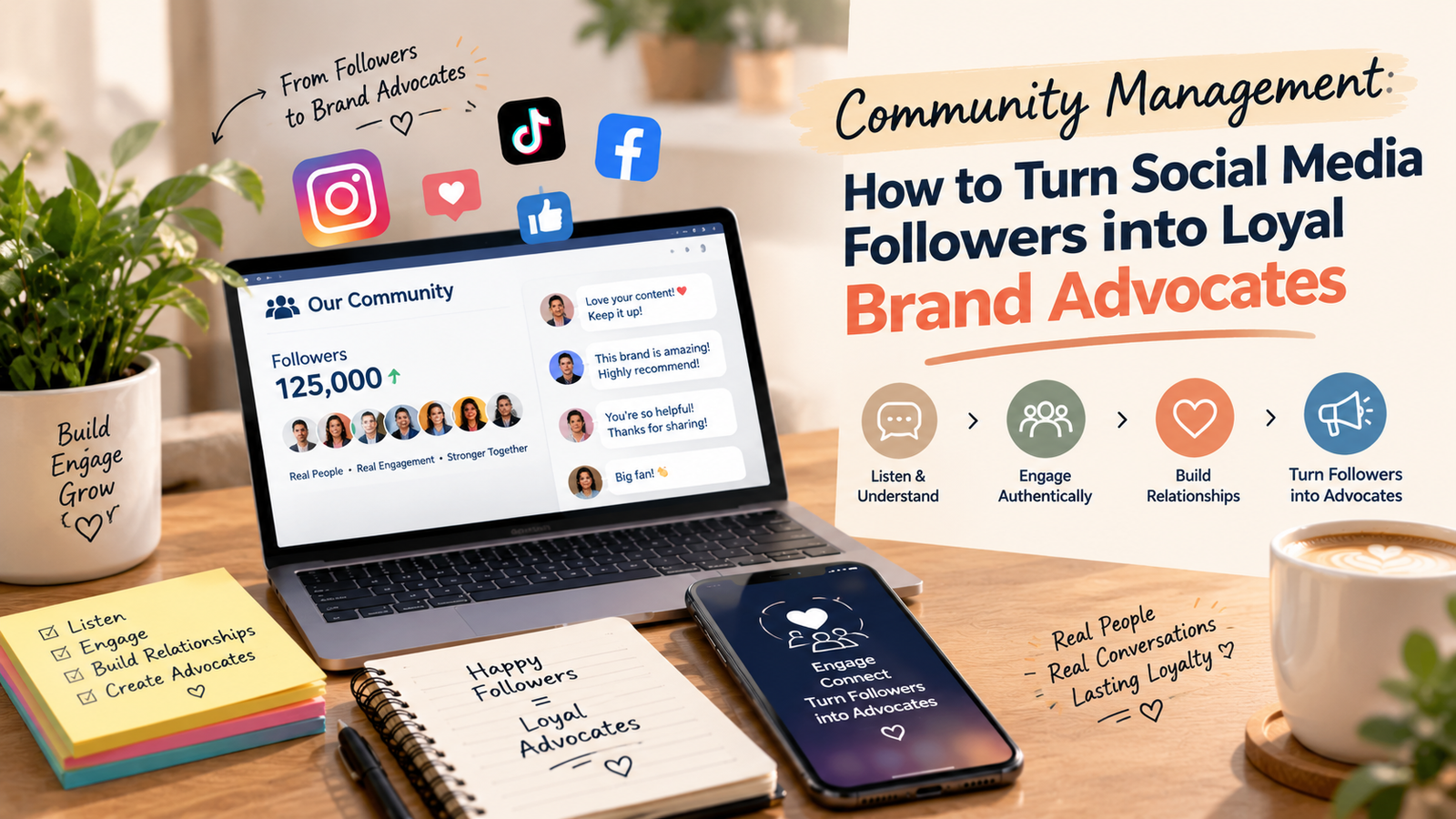
In the early days of digital marketing, social media success was measured by vanity metrics: follower counts, likes, and raw reach. Today, algorithm updates, ad-fatigue, and rising customer acquisition costs have changed the game completely. High follower counts no longer guarantee sales or engagement.
The real competitive advantage lies in community management—the strategic practice of nurturing online followers, facilitating peer-to-peer interactions, and transforming casual audience members into passionate brand advocates.
This comprehensive guide covers the framework, strategies, and operational tactics required to build an active social media community that actively sells your brand for you.
The Growth Pyramid: From Casual Scroll to Brand Advocate
To effectively turn followers into advocates, you must understand the psychological journey a social media user takes with your brand. Audience conversion follows a distinct four-tier maturity model:
                      / \
                     /   \
                    /  A  \      Advocates (1–5%)
                   /-------\     Active promoters, user-generated content creators
                  /    C    \    Community Members (10–15%)
                 /-----------\   Regular commenters, repeat buyers, group participants
                /      E      \  Engaged Followers (20–30%)
               /---------------\ Occasional likers, silent lurkers, brand observers
              /        F        \ Passive Followers (50%+)
             /-------------------\ One-time followers, casual feed scrollers
- Passive Followers: They hit the “Follow” button after seeing a viral video or ad, but rarely interact with your content.
- Engaged Followers: They regularly consume your content, like your posts, and occasionally view your stories or videos.
- Community Members: They actively comment, join your live streams, participate in polls, buy your products, and answer other users’ questions in your comments section.
- Brand Advocates: They create unsolicited User-Generated Content (UGC), defend your brand during public criticism, refer new customers organically, and actively promote your mission.
Your primary objective with community management is to move people systematically up this pyramid.
Step 1: Shift from One-Way Broadcasting to Two-Way Dialogue
The biggest mistake brands make on social media is treating their profiles like digital billboards. They publish content at their audience rather than conversing with them.
Implement the “10x Reply Principle”
For every post you publish, aim to generate ten meaningful two-way conversations. When users take time to comment on your posts, generic responses like “Thanks! 🙏” kill engagement momentum.
- Lazy Reply: “Thanks for reading!”
- Community-Building Reply: “Appreciate your thoughts, Alex! You raised a great point about budget allocation—what tool do you currently use for tracking that?”
By asking open-ended follow-up questions, you keep the conversation alive in the comments section. This signals high interaction quality to platform algorithms while making individual users feel valued and heard.
Proactive Social Listening
Don’t wait for users to tag your official account directly. Utilize social listening tools to track:
- Brand name misspellings and un-tagged mentions.
- High-intent industry keywords and frequent customer pain points.
- Relevant subreddits, X threads, and niche forums.
Jumping into un-tagged public conversations with helpful, non-promotional value instantly positions your brand as an approachable industry expert.
Step 2: Establish Brand Rituals and Insider Culture
Strong communities thrive on shared identity, shared language, and recurring group rituals. When followers feel like they belong to an exclusive “insider club,” their emotional connection to your brand strengthens rapidly.
+-------------------------------------------------------------------------------+
|                       ELEMENTS OF COMMUNITY CULTURE                           |
|                                                                               |
|  [ Dedicated Insider Naming ] + [ Weekly Group Rituals ] + [ Shared Language ]|
+-------------------------------------------------------------------------------+
1. Give Your Community an Identity
Give your community a distinct name that reflects a shared passion rather than just your corporate identity.
- Example: Gymshark doesn’t just call their audience “customers”—they built the Gymshark 66 fitness community.
- Example: Sephora’s Beauty Insider Community gives beauty enthusiasts a dedicated platform to share swatches and reviews.
2. Create Predictable Weekly Rituals
Establish recurring interactive features on your social calendar so your community anticipates participating every week:
- “Q&A Tuesdays”: Host live Instagram or LinkedIn sessions where founders or product leads answer unscripted follower questions.
- “Member Spotlight Fridays”: Highlight a community member’s achievement, user-generated post, or business win on your main feed.
- “Hot Take Thursdays”: Post a lighthearted debate topic relevant to your niche to drive community discussion.
Step 3: Turn Customer Support into Delight Moments
Every customer service interaction on social media is a public audition for your brand’s values. How you handle complaints, questions, and negative feedback determines whether an unhappy user unfollows you or becomes a loyal advocate.
The A.C.T. Public Resolution Framework
+-----------------------------------------------------------------------------+
|                        THE A.C.T. RESPONSE FRAMEWORK                        |
|                                                                             |
| [ Acknowledge & Empathize ] ➔ [ Convert to Private ] ➔ [ Transparency Check]|
+-----------------------------------------------------------------------------+
- Acknowledge Publicly (A): Reply quickly to public complaints on X, Instagram, or Facebook within 15–30 minutes. Validate their frustration empathetically without immediate defensive language.
- Convert to Private (C): Move the conversation to direct messages (DMs) or email to safely collect account details and resolve complex operational issues.
- Transparent Resolution (T): Once resolved privately, post a quick follow-up comment publicly confirming the solution was delivered.
Surprise and Delight Tactics
Allocating a small budget toward unexpected audience appreciation yields massive returns in organic advocacy.
- Send Unsolicited Care Packages: When a loyal community member routinely engages with your posts or shares their purchase, send them custom swag or a gift box without asking for anything in return.
- Personalized Video DMs: Record quick 10-second personal video messages (using Instagram or LinkedIn DMs) welcoming new followers or thanking customers for detailed feedback.
Step 4: Co-Create Products and Content with Your Community
Advocacy stems from psychological ownership. When your audience feels they actively helped build your products or content, they become heavily invested in promoting them.
| Co-Creation Level | Execution Strategy | Expected Outcome |
|---|---|---|
| Micro-Co-Creation | Use Polls, Q&As, and Quiz stickers in Instagram Stories to let users vote on minor features (e.g., choosing blog post topics, selecting color options for a new logo). | Immediate story engagement boosts and rapid audience preference feedback. |
| Meso-Co-Creation | Host community focus groups to test upcoming product features or read pre-release manuscript drafts. | Highly targeted product refinement and deep community trust. |
| Macro-Co-Creation | Launch user-generated content (UGC) campaigns, encouraging followers to submit photos, videos, or case studies to be featured in your main marketing materials. | High volume of authentic marketing assets and passionate brand advocacy. |
Step 5: Build Dedicated High-Intent Spaces
While public feeds (Instagram Reels, TikTok, LinkedIn posts) are excellent for top-of-funnel reach, true advocacy develops in focused, high-intent spaces where members can connect directly with each other.
               +----------------------------------+
               | TOP-OF-FUNNEL PUBLIC PLATFORMS   |
               | (Instagram, TikTok, LinkedIn, X) |
               +----------------+-----------------+
                                |
                                v
               +----------------------------------+
               | HIGH-INTENT COMMUNITY SPACES     |
               | (Discord, Circle, Facebook Group)|
               +----------------+-----------------+
                                |
                                v
               +----------------------------------+
               |     BRAND ADVOCATE PROGRAM       |
               |  (VIP Rewards, Early Access)     |
               +----------------------------------+
Community Platform Options
- Discord / Slack: Best for tech, web3, SaaS, and gaming brands that require real-time chat, topic channels, and voice hangouts.
- Circle / Mighty Networks: Ideal for creators, educators, and service businesses seeking structured courses, event spaces, and discussion forums under their own domain.
- Private Facebook Groups: Great for B2C consumer products, e-commerce brands, and local business communities where users are already active daily.
Step 6: Gamify Advocacy and Reward Your Superfans
Once you identify your top 1–5% most active followers, create a formal advocate appreciation program to sustain their energy and motivation.
Essential Elements of a Superfan Program
- Early Access: Give advocates access to new product releases, sale events, or feature updates 48 hours before the general public.
- Direct Executive Access: Host monthly private group calls with your founders or product team to discuss company strategy and gather direct input.
- Exclusive Perks: Offer branded merchandise, affiliate commission links, or custom profile badges that display their community status.
Measuring Community Management Success
Community management efforts should directly support core business objectives. Track these key metrics to measure return on investment (ROI):
- Net Promoter Score (NPS): Measure how likely community members are to recommend your brand to friends or colleagues.
- User-Generated Content Volume: Track the monthly percentage increase in organic user tagged posts and brand hashtag mentions.
- Community-Driven Retention Rate: Compare churn rates and repeat purchase rates of active community group members against non-community customers.
- Direct Organic Referral Conversions: Track traffic and sales generated via community-distributed referral links and discount codes.
Summary
Building brand advocacy is not about accumulating millions of passive followers. It is about actively cultivating deep relationships with the audience you already have.
By prioritizing two-way communication, establishing inclusive community rituals, resolving complaints with care, co-creating products, and rewarding your most active supporters, you transform your social media presence from an noisy broadcast channel into a self-sustaining engine of passionate brand advocates.
Blog SEO Metadata
- Primary Blog Tags:
Community Management,Brand Advocates,Social Media Strategy,Customer Engagement - Suggested Meta Title: How to Turn Social Media Followers into Brand Advocates
- Suggested Meta Description: Master community management with this complete guide. Learn how to turn passive social media followers into loyal brand advocates and boost organic growth.