
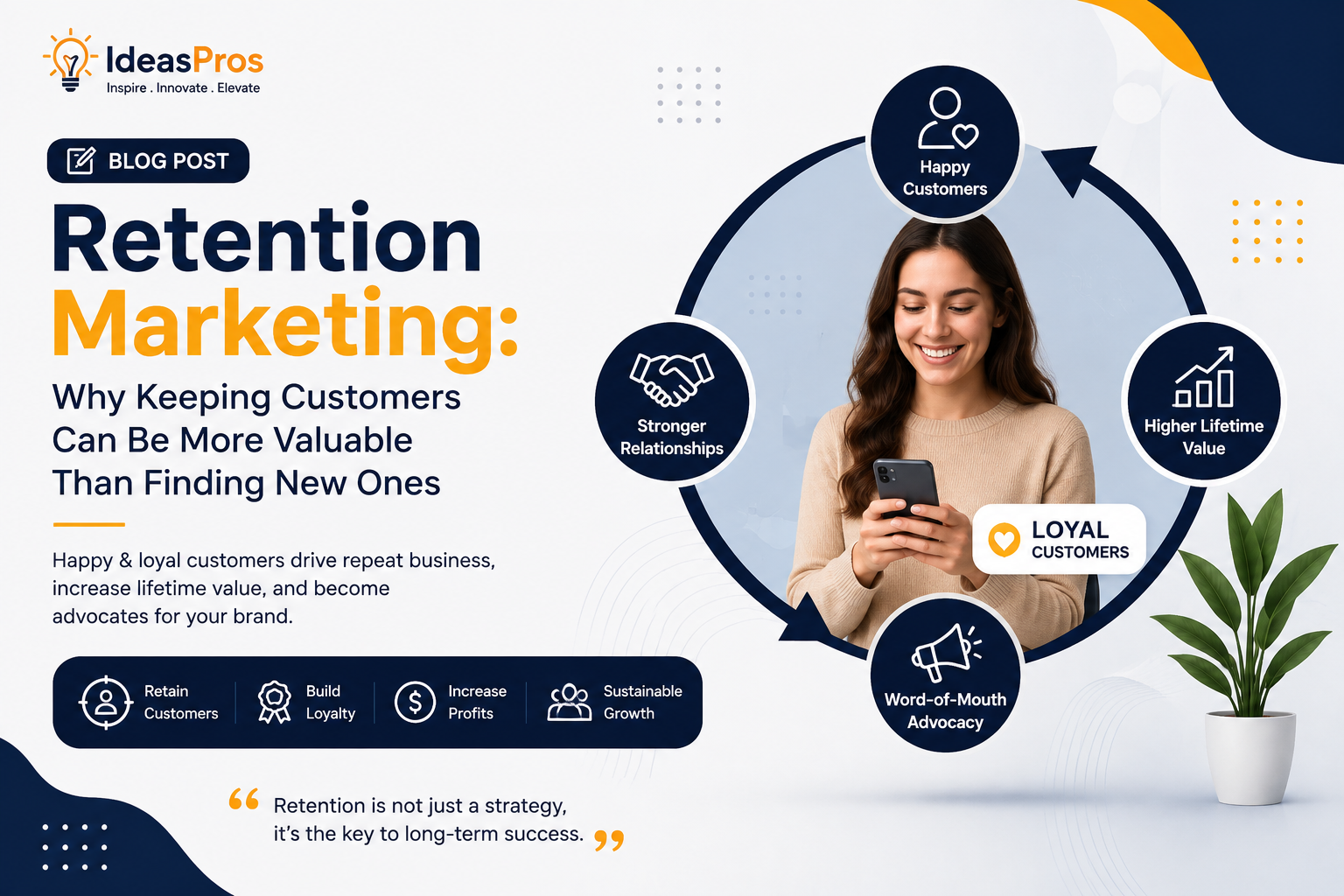
In the world of business, growth is often associated with acquiring new customers. Marketers spend vast sums of money running Pay-Per-Click (PPC) ads, launching social media campaigns, hosting events, and optimizing landing pages—all to attract fresh eyeballs and first-time buyers.
However, focusing exclusively on acquisition is like filling a leaking bucket. No matter how much water you pour into the top, the bucket will never stay full if there are holes in the bottom.
This realization has driven a major shift in modern strategy: Retention Marketing.
Instead of constantly chasing new users, retention marketing focuses on nurturing existing customers, driving repeat purchases, increasing customer lifetime value (CLV), and turning casual buyers into passionate brand advocates.
What Is Retention Marketing?
Retention marketing is a strategic approach focused on keeping existing customers engaged, satisfied, and actively buying from your brand over time.
While Acquisition Marketing focuses on top-of-funnel activities like awareness and initial lead capture, Retention Marketing operates at the bottom of the funnel. It ensures that once a customer makes a purchase, their relationship with your brand has just begun.
Traditional Acquisition-First Funnel:
Awareness -> Consideration -> Purchase -> [End of Relationship]

Retention-Driven Lifecycle Model:
Awareness -> Purchase -> Onboarding -> Repeat Purchases -> Loyalty & Advocacy
The Economics: Retention vs. Acquisition
The financial argument for focusing on customer retention is backed by extensive business data and economic metrics.
1. The Cost Advantage (CAC vs. Retention Cost)
Acquiring a new customer is significantly more expensive than keeping an existing one. Depending on the industry, acquiring a new customer can cost anywhere from 5 to 25 times more than retaining an existing customer.
Acquisition requires heavy spend on advertising, sales outreach, and promotional discounts to overcome initial consumer skepticism. In contrast, existing customers already know your brand, trust your product, and require far lower marketing touchpoints to buy again.
2. Higher Conversion Rates
Converting a brand-new website visitor into a paying customer typically yields a conversion rate between 1% and 3%.
For existing customers, however, the probability of selling again skyrockets to 60% to 70%. Repeat customers are already familiar with your purchasing process, payment methods, and product quality, eliminating the primary friction points that stall first-time sales.
3. Increased Average Order Value (AOV)
Existing customers spend more per transaction than new customers. As trust grows, buyers become comfortable purchasing higher-priced items, upgrading their subscriptions, or adding complementary products to their order. Studies show that loyal customers spend up to 31% more per order compared to first-time shoppers.
4. Exponential Profitability Boost
According to research by Bain & Company, increasing customer retention rates by just 5% can increase overall profits by 25% to 95%. Because the upfront costs of acquiring a customer are paid during the initial sale, subsequent sales yield significantly higher profit margins.
Core Metrics to Track Retention Success
To execute an effective retention marketing strategy, you must measure the right key performance indicators (KPIs).
| Metric | How It Is Calculated | Strategic Importance |
|---|---|---|
| Customer Retention Rate (CRR) | ((End Customers - New Customers) / Start Customers) * 100 | Measures the percentage of customers who remain active over a given period. |
| Customer Churn Rate | (Lost Customers / Total Customers at Start) * 100 | Tracks the rate at which customers stop doing business with you. |
| Customer Lifetime Value (CLV) | Average Purchase Value * Purchase Frequency * Customer Lifespan | Measures total revenue a single customer generates over their lifetime. |
| Repeat Purchase Rate (RPR) | (Number of Repeat Buyers / Total Unique Buyers) * 100 | Indicates how effective your post-purchase marketing is at driving repeat sales. |
Key Strategies for Driving Customer Retention
Building long-term customer loyalty requires deliberate, user-centered touchpoints throughout the post-purchase journey.
1. Create an Exceptional Onboarding Experience
The initial period following a purchase sets the tone for the entire customer relationship. If a buyer experiences confusion, difficulty using a product, or slow delivery, buyer’s remorse sets in quickly.
- Immediate Post-Purchase Communication: Send order confirmations instantly with clear shipping timelines or digital access instructions.
- Educational Content: Send “How-To” guides, video tutorials, and tips showing users how to get the most value out of their purchase.
- Proactive Follow-ups: Check in with customers 7–14 days after delivery to ensure their expectations were met.
2. Implement Personalized Email & SMS Marketing
Generic, mass-blast emails lead to high unsubscribe rates. Use customer data to deliver highly targeted, personalized retention campaigns:
- Replenishment Reminders: For consumable products (e.g., supplements, coffee, skincare), send automated reminders shortly before the customer is expected to run out.
- Cross-Sell and Up-Sell Campaigns: Recommend products that complement previous purchases (e.g., suggesting a laptop sleeve to someone who bought a laptop).
- VIP & Milestone Offers: Celebrate customer anniversaries, birthdays, or purchasing milestones with exclusive discounts or early access to new releases.
3. Build a Structured Loyalty or Rewards Program
Loyalty programs give customers a clear financial or experiential incentive to keep returning to your brand rather than trying a competitor.
Example Tiered Loyalty Framework:
[Bronze Tier: Earn 1x Points] -> [Silver Tier: Earn 1.5x Points + Free Shipping] -> [Gold Tier: Early Access + Dedicated Support]
- Point-Based Systems: Allow customers to earn points for purchases, social media shares, and reviews, which can be redeemed for store credit.
- VIP Tiers: Reward top spenders with exclusive perks, higher earning rates, and dedicated customer service to make them feel valued.
4. Provide Proactive and Empathetic Customer Support
Customer service is often viewed as a cost center, but in reality, it is a primary driver of retention. Resolving an issue quickly and generously can transform a dissatisfied buyer into a lifelong brand advocate.
- Omnichannel Availability: Offer support via live chat, email, phone, and social media DMs.
- Empowered Support Agents: Give customer service teams the authority to issue immediate replacements, refunds, or credits without endless manager approvals.
- Self-Service Knowledge Bases: Maintain comprehensive FAQ sections and tutorials so users can find instant solutions to common issues.
Turning Loyal Customers into Brand Advocates
The ultimate level of customer retention is advocacy. When customers love your brand, they do not just buy from you repeatedly—they actively recruit new buyers on your behalf.
The Power of Word-of-Mouth Marketing
Word-of-mouth is the most trusted form of advertising. Consumers are far more likely to trust recommendations from friends, family, or colleagues than paid ads from a business.
Implementing a Referral Program
Encourage customer advocacy by launching a structured referral program with mutual incentives:
- “Give $20, Get $20” models reward both the existing customer and the new buyer.
- Make referral links easy to share via text, email, and social media directly from the account dashboard.
Balancing Acquisition and Retention
Focusing on retention does not mean abandoning acquisition entirely. A healthy business requires a balanced approach.
The Balanced Growth Engine:
Acquisition (Attracts New Users) + Retention (Maximizes Value & Reduces Churn) = Compound Business Growth
- Early-Stage Businesses: Focus heavily on acquisition to establish a initial customer base and validate product-market fit.
- Growing & Mature Businesses: Shift an increasing portion of budget and strategy toward retention to maximize profitability and build long-term enterprise value.
Without acquisition, you have no new users to retain. But without retention, your acquisition spend is largely wasted. The two strategies must work together to create compound growth.
Final Thoughts
Acquiring new customers will always play an important role in marketing, but retention is where sustainable profitability is built.
By delivering exceptional post-purchase experiences, personalizing customer interactions, implementing rewards programs, and resolving issues proactively, businesses can maximize Customer Lifetime Value (CLV) and reduce dependence on expensive advertising platforms.
Stop pouring money into a leaky bucket. Audit your customer journey today, invest in retention strategies, and transform your existing buyers into your business’s strongest growth engine.