
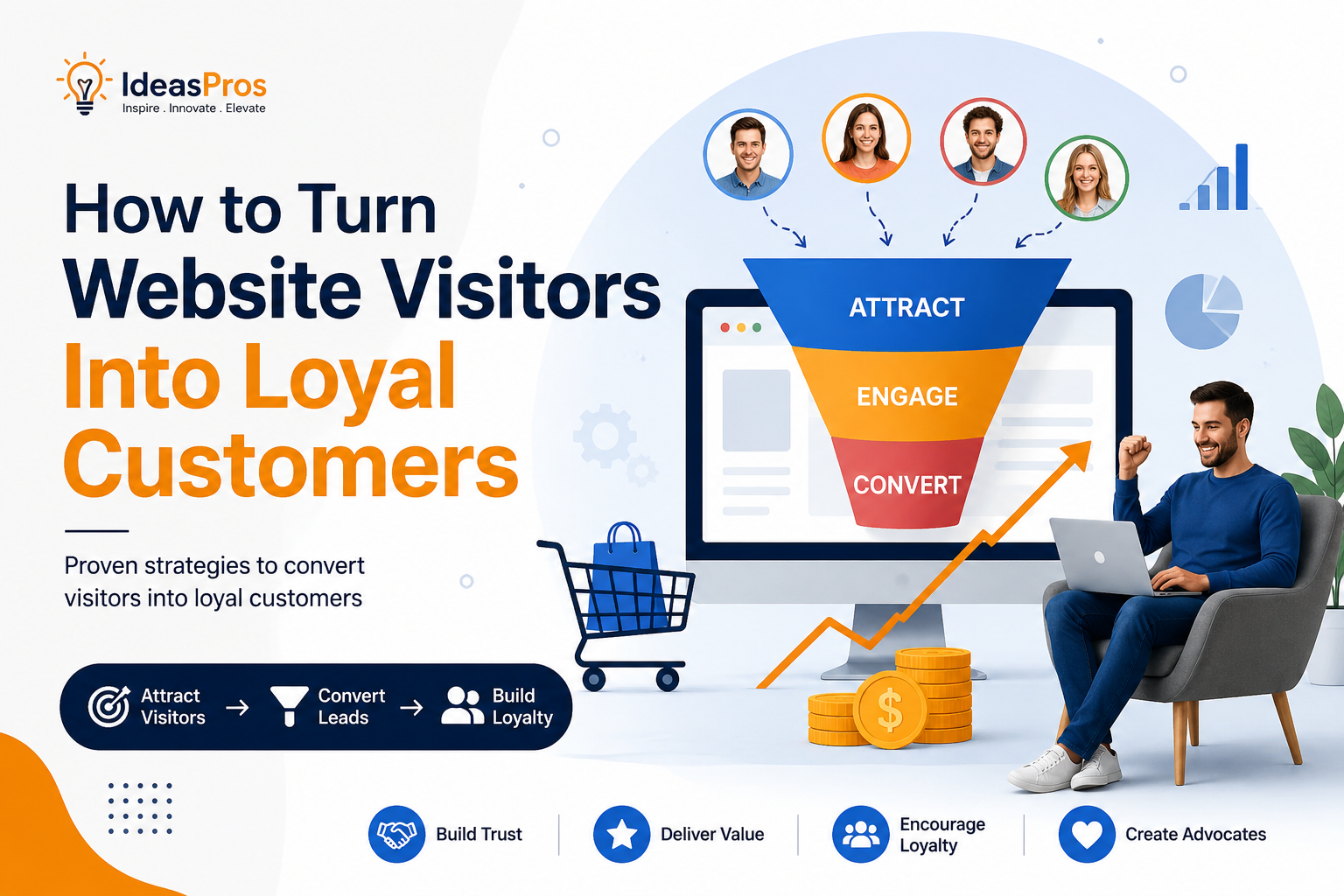
Attracting traffic to your website is only half the battle. You can invest heavily in search engine optimization (SEO), run targeted pay-per-click (PPC) ad campaigns, and build an active social media presence, but none of it matters if your visitors leave after a few seconds without taking action.
A high volume of website traffic looks impressive on paper, but traffic alone does not pay the bills. Conversions and customer retention do.
Turning a first-time website visitor into a casual buyer is a great achievement. However, transforming that visitor into a repeat, loyal brand advocate—someone who trusts your brand, purchases repeatedly, and recommends you to others—is where real business growth happens.
Here is a comprehensive, step-by-step roadmap to guide your audience through the entire buyer’s journey and build a loyal customer base for your brand.
1. Optimize First Impressions and User Experience (UX)
First impressions are formed within milliseconds. When a visitor lands on your website, they instantly evaluate its design, speed, and usability. If your site feels sluggish, cluttered, or difficult to navigate, users will hit the back button before even reading your value proposition.
Speed Up Your Website
Page load speed directly impacts bounce rates and conversions. If your website takes longer than three seconds to load, a massive percentage of your traffic will abandon it.
- Compress Images: Use modern image formats like WebP to reduce file sizes without sacrificing quality.
- Leverage Caching and CDNs: Implement browser caching and use Content Delivery Networks (CDNs) to serve data faster based on the user’s location.
- Clean Up Code: Minify CSS, JavaScript, and HTML files to remove unnecessary code and speed up rendering times.
Design for Mobile-First Navigation
More than half of global web traffic comes from mobile devices. Your website must be fully responsive and tailored for smaller screens.
- Ensure buttons and call-to-action (CTA) elements are easy to tap on mobile screens.
- Keep navigation menus concise, logical, and intuitive.
- Avoid intrusive pop-ups that block main content on mobile screens.
Clear and Clean Visual Hierarchy
A cluttered website overwhelms the brain. Use whitespace strategically to highlight core messages, product images, and key value propositions. Make sure visitors understand within 5 seconds who you are, what you offer, and how it solves their problem.
2. Craft Compelling, Value-Driven Content
Content is what builds trust, establishes authority, and keeps visitors coming back. If your website only consists of hard-sell product pages, users will lack a reason to engage deeply with your brand.
Create Educational Blog Posts and Guides
Produce content that directly addresses the pain points, questions, and interests of your target audience.
- How-To Guides: Show users step-by-step solutions to their everyday challenges.
- Industry Insights: Share expert commentary, trends, and data analysis that position your business as a trusted authority.
- Comparison Articles: Help buyers make informed decisions by transparently comparing solutions or products.
Match Content to the Buyer’s Journey
Not every visitor is ready to buy immediately. Organize your content to meet users where they are:
- Awareness Stage: Informative blog posts, infographics, and broad topic guides designed to educate.
- Consideration Stage: Product demos, case studies, and comparison guides that demonstrate your solution.
- Decision Stage: Free trials, customer testimonials, detailed product specifications, and special introductory discounts.
3. Leverage Social Proof to Build Immediate Trust
New website visitors are naturally skeptical. They do not know your brand, and they do not know if your product lives up to its claims. Social proof acts as validation from unbiased peers, significantly lowering the barrier to entry.
Showcase Authentic Reviews and Rating Systems
Place genuine customer reviews, star ratings, and testimonials prominently across high-converting pages, especially on product pages and checkout steps.
Visual Layout Example for Social Proof:
+-------------------------------------------------------------+
|  "[Product Name] completely transformed our workflow.       |
|   Setup took under 10 minutes!"                             |
|  - Sarah M., Verified Buyer ⭐⭐⭐⭐⭐                       |
+-------------------------------------------------------------+
Display Detailed Case Studies and Success Stories
If you operate in the B2B space or sell high-ticket products, short reviews may not be enough. Write in-depth case studies highlighting:
- The client’s initial challenge or problem.
- The specific product or service implemented.
- Measurable, quantifiable results achieved (e.g., “Increased sales by 45% in 90 days”).
Highlight Trust Badges and Guarantees
Reduce perceived purchase risk by clearly displaying:
- Secure Checkout Badges: SSL certificates, trusted payment gateway logos (PayPal, Stripe, Visa).
- Clear Policy Guarantees: “30-Day Money-Back Guarantee,” “Free Returns,” or “24/7 Customer Support.”
4. Personalize the Onsite User Experience
Generic marketing messaging no longer converts like it used to. Modern consumers expect personalized experiences tailored to their preferences, browsing behavior, and interests.
Dynamic Content and Recommendations
Implement algorithms that suggest products or articles based on what the visitor previously viewed or added to their cart.
- “Customers who bought this item also liked…”
- “Recommended based on your recent browsing history.”
Behavioral-Based Triggers and Pop-ups
Avoid static pop-ups that show up the moment a visitor lands on your page. Instead, use smart behavioral triggers:
- Exit-Intent Pop-ups: Display a discount code, free resource, or newsletter invitation when the user moves their cursor to close the tab.
- Scroll-Depth Triggers: Offer relevant content upgrades once a user has read 70% of an informative article.
5. Implement Effective Lead Capture Strategies
Most first-time website visitors will leave without buying. To ensure you do not lose them forever, build a mechanism to capture their contact information so you can nurture the relationship over time.
Offer High-Value Lead Magnets
People rarely give away their email address without getting something useful in return. Create lead magnets that offer immediate, tangible value:
- E-books & Whitepapers: Comprehensive guides on niche industry topics.
- Checklists & Templates: Time-saving tools users can download and apply immediately.
- Exclusive Discount Codes: “Get 15% off your first order when you subscribe.”
Simplify Lead Capture Forms
Keep sign-up forms short and straightforward. Asking for too much information upfront creates friction. In most cases, asking for a First Name and an Email Address yields the highest conversion rates.
6. Build Loyalty Through Strategic Email Marketing
Once you have captured a visitor’s email address, your email marketing strategy takes over the job of turning that warm lead into a repeat buyer.
Craft an Engaging Automated Welcome Series
The welcome email typically gets the highest open rates of any email campaign. Use a 3- to 5-part automated sequence:
- Email 1 (Immediate): Deliver the promised lead magnet or discount code and warmly welcome them to your community.
- Email 2 (Day 2): Share your brand’s story, mission, and core values to forge an emotional connection.
- Email 3 (Day 4): Highlight your top-rated products or essential resources, accompanied by customer testimonials.
- Email 4 (Day 7): Provide a soft sales pitch or a limited-time introductory offer.
| Email Sequence | Primary Goal | Focus Content |
|---|---|---|
| Email 1 | Value Delivery | Lead magnet link, discount code, welcome message |
| Email 2 | Brand Identity | Founder’s story, mission statement, core values |
| Email 3 | Proof & Trust | Product features, customer reviews, video demos |
| Email 4 | Conversion | Limited-time call-to-action, special purchase offer |
Segment Your Email List
Do not send the exact same broadcast email to your entire list. Segment subscribers based on:
- Previous purchase history.
- Browsing behavior on your website.
- Engagement level (active subscribers vs. inactive leads).
7. Turn One-Time Buyers Into Repeat Customers
Converting a visitor into a first-time buyer is a huge milestone, but true loyalty is cultivated after the purchase is completed.
Deliver Outstanding Post-Purchase Experiences
- Clear Order Tracking: Send immediate order confirmations and clear, real-time tracking updates.
- Exceptional Packaging: Make unboxing your physical product memorable, or deliver digital products instantly with step-by-step onboarding guides.
- Proactive Support: Reach out post-purchase to ask if they need assistance setting up or using their product.
Launch a Customer Loyalty or Rewards Program
Give customers a compelling reason to choose your brand over competitors every single time.
- Point-Based Systems: Earn points for every dollar spent, which can be redeemed for discounts or free gifts.
- VIP Tiered Rewards: Unlock higher perks, free shipping, or early access to new product launches as customers reach spending milestones.
- Referral Programs: Reward existing customers with discounts or credits when they refer friends and family.
Provide Omnichannel Customer Service
Customer service can make or break loyalty. Ensure users can reach your team effortlessly through multiple channels:
- Live Chat & AI Chatbots: Address pre-purchase questions instantly while users browse your site.
- Help Center & FAQs: Maintain an organized self-service knowledge base to resolve common queries instantly.
- Prompt Human Support: Ensure complex queries are escalated quickly to empathetic, knowledgeable human representatives.
8. Continuous Optimization Through Data and Analytics
Turning website visitors into loyal customers is not a static project; it requires continuous testing, analyzing, and refining based on real user behavior.
Track Core Conversion Metrics
Consistently monitor your key performance indicators (KPIs) to identify friction points in your sales funnel:
- Bounce Rate: The percentage of visitors who leave after viewing only one page.
- Conversion Rate: The percentage of visitors who complete a desired action (purchasing, signing up).
- Customer Lifetime Value (CLV): The total revenue a customer generates throughout their relationship with your business.
- Cart Abandonment Rate: The percentage of shoppers who add items to their cart but leave without checking out.
Conduct A/B Split Testing
Systematically test different elements on your site to see what yields higher conversion rates:
- Headlines: Test benefit-focused headlines against curiosity-driven headlines.
- CTA Buttons: Experiment with button color, size, placement, and copy (e.g., “Buy Now” vs. “Get Started Today”).
- Landing Page Layouts: Test simple single-column designs against detailed multi-section layouts.
Final Thoughts
Transforming casual website visitors into loyal customers does not happen by accident. It requires a deliberate, user-centered strategy that combines seamless performance, authentic trust-building, personalized communication, and post-purchase care.
By optimizing your website’s performance, providing valuable content, capturing leads strategically, and rewarding repeat business, you create a sustainable pipeline that converts high-bounce web traffic into an active community of lifelong brand advocates. Start by auditing your website today, identify where visitors are dropping off, and implement these strategies step-by-step.