
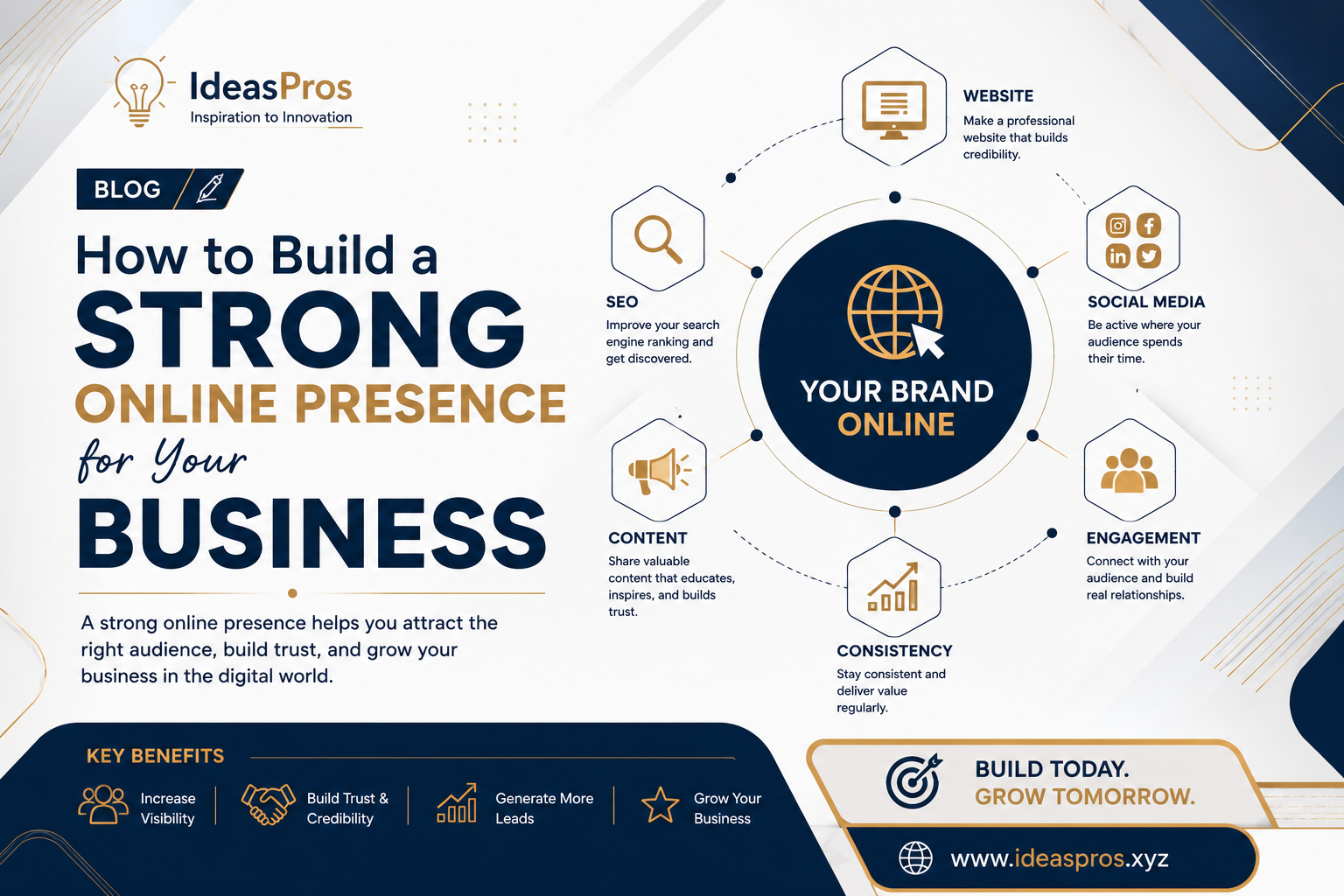
In a hyper-connected global marketplace, your online presence functions as the digital front door to your enterprise. Consumers no longer search for businesses simply to make immediate purchases; they rely on digital channels to evaluate credibility, compare options, and build long-term relationships with brands. A weak or disjointed web footprint limits growth potential and concedes valuable market share to proactive competitors.
Establishing a robust online presence requires more than setting up a simple website or posting sporadically on social media. It demands a unified, structured strategy that aligns your digital touchpoints, content assets, and customer engagement channels into a scalable engine for brand equity.
1. Crafting a High-Converting Digital Storefront
Your website is the central anchor of your entire online ecosystem—the single digital platform you fully own and control. Every ad campaign, social media post, and email message should seamlessly guide audiences back to this central hub.
- Prioritize User Experience (UX) and Speed: Ensure your site loads within seconds, offers intuitive navigation, and provides an effortless browsing experience across all screen sizes.
- Optimize for Mobile First: Mobile devices drive the majority of global web traffic. A responsive layout with quick-loading assets is non-negotiable for retention and search engine rankings.
- Define Clear Calls to Action (CTAs): Direct visitors toward tangible outcomes—whether subscribing to a newsletter, booking a consultation, or purchasing a product—with minimal friction.
Strategic Reality: A sleek visual design cannot compensate for slow load times or complex navigation. Functionality, clarity, and performance dictate conversion success.
2. Dominating Search Engine Visibility (SEO)
Building a digital footprint is meaningless if your target audience cannot find you when actively searching for solutions. Search Engine Optimization (SEO) ensures your business gains organic visibility during critical intent-driven moments.
| SEO Pillar | Strategic Focus Area | Long-Term Impact |
| Technical SEO | Site speed, mobile indexing, crawlability, security | Ensures search engines can parse and index your site |
| On-Page SEO | Intent-driven keywords, high-quality content, meta architecture | Drives highly relevant organic traffic to key landing pages |
| Off-Page SEO | Backlinks, digital PR, brand mentions, industry authority | Enhances domain authority and overall search credibility |
| Local SEO | Google Business Profile, localized citations, reviews | Captures high-intent local customer queries and foot traffic |
To build sustainable search dominance, optimize for topic authority rather than isolated keywords. Create comprehensive content hubs that solve real user problems and establish your domain as an authoritative industry reference.
3. Developing an Intentional Content Strategy
Content marketing is the engine that drives search rankings, feeds social channels, and builds buyer trust. Rather than producing generic content, publish material that speaks directly to specific stages of the customer journey.
[ Problem Awareness Content ] ➔ [ Solution Evaluation Content ] ➔ [ High-Intent Conversion Content ]
Structuring Your Content Framework
- Top-of-Funnel (Awareness): Publish informative blog posts, educational guides, and explanatory videos that address foundational industry questions.
- Middle-of-Funnel (Consideration): Share whitepapers, comparison guides, and detailed case studies that demonstrate how your solution solves specific pain points.
- Bottom-of-Funnel (Decision): Offer client testimonials, live demonstrations, interactive calculators, and targeted landing pages that convert evaluate-stage prospects into active clients.
4. Establishing Strategic Social Media Channels
Managing a strong social media footprint does not mean maintaining an active profile on every emerging platform. Sustainable digital expansion requires focusing effort on the channels where your ideal customers actually spend their time.
- Identify Platform Alignment: B2B service providers typically thrive on LinkedIn and YouTube, while visual B2C brands find higher engagement on Instagram, TikTok, and Pinterest.
- Maintain Consistency in Branding: Ensure your visual identity, tone of voice, and brand messaging remain consistent across every platform.
- Focus on Conversation, Not Broadcasting: Treat social platforms as two-way engagement tools. Respond to comments, answer inquiries promptly, and participate in broader industry conversations.
5. Building Direct Channels via Owned Media
Relying exclusively on third-party algorithms for customer reach introduces immense long-term vulnerability. True digital independence relies on cultivating direct relationships through owned communication channels, particularly email marketing.
- Offer Value-Driven Lead Magnets: Encourage website visitors to join your community by offering premium assets such as industry reports, templates, or exclusive discounts.
- Implement Automated Onboarding Journeys: Design automated email sequences that welcome new subscribers, introduce your core value proposition, and gradually nurture trust.
- Segment Your Audience: Group subscribers based on preferences, engagement levels, or purchase history to deliver targeted, highly relevant messaging.
6. Harnessing Reputation Management and Social Proof
In an online environment, public reputation and peer validation directly influence conversion rates. Prospects rely heavily on digital reviews, case studies, and third-party endorsements before committing to a purchase.
- Systematize Review Collection: Request reviews from satisfied customers automatically following a completed transaction or project milestone.
- Monitor Brand Mentions: Use digital listening tools to keep track of reviews, social mentions, and forum discussions regarding your business.
- Address Negative Feedback Gracefully: Respond to criticism professionally, publicly demonstrating your commitment to customer satisfaction and operational accountability.
7. Analyzing Performance and Iterating Strategy
A resilient online presence requires continuous measurement and refinement. Regularly review performance analytics to understand what attracts visitors, retains attention, and converts leads.
- Track Meaningful Business Metrics: Look beyond vanity metrics like page impressions or follower counts. Focus on conversion rates, cost per acquisition (CPA), customer lifetime value (LTV), and organic search growth.
- A/B Test Conversion Points: Periodically test headlines, CTA placements, button colors, and page layouts to optimize user experience and conversion performance.
- Adapt to Algorithmic and Market Shifts: Continuously audit your digital touchpoints to align with updated search engine standards, changing user preferences, and emerging digital trends.
Building a strong online presence is a continuous process of strategic execution, refinement, and engagement. By developing a high-performing web application, mastering organic search visibility, creating value-driven content, and building direct customer relationships, your business lays a durable foundation for long-term growth and market authority.