
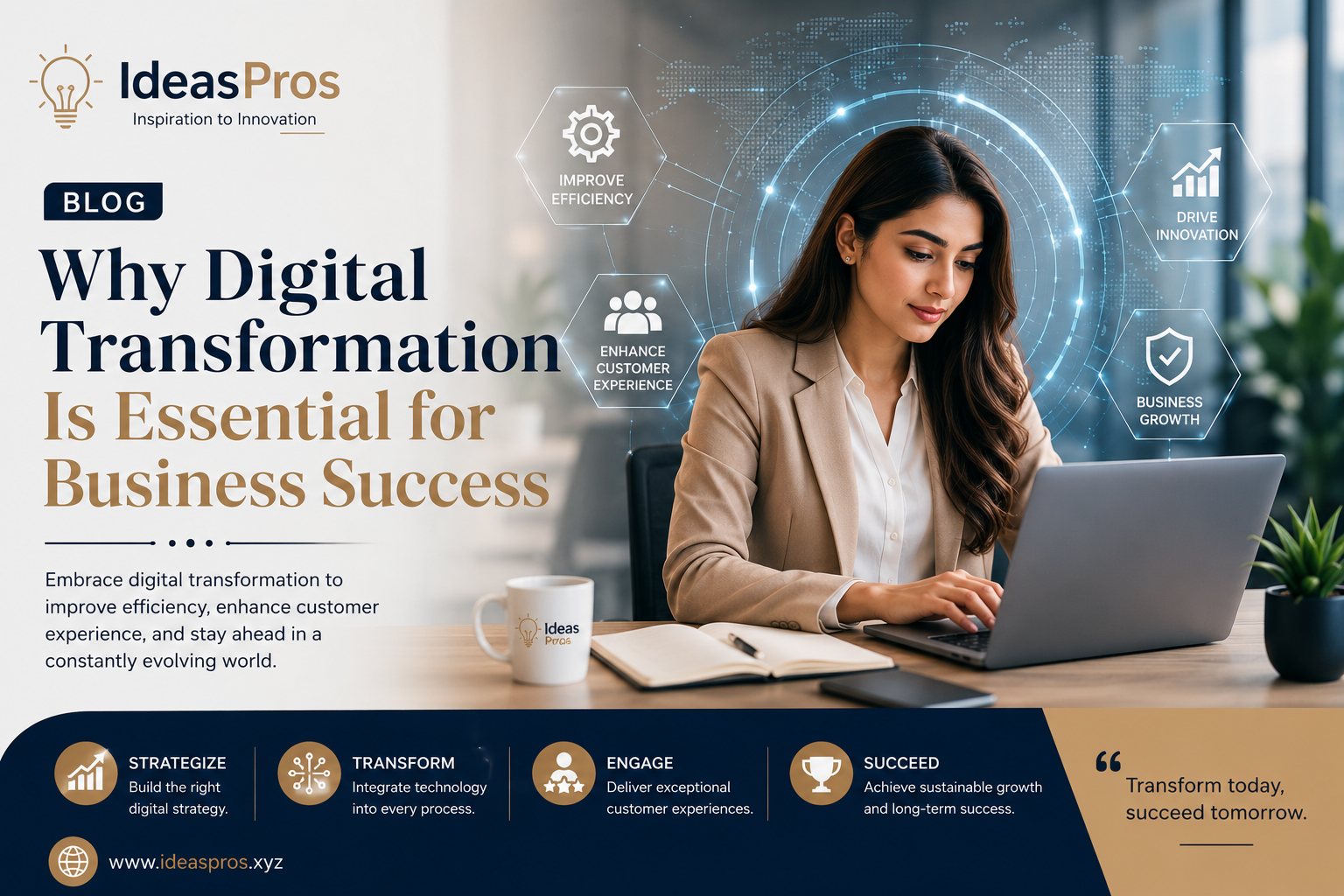
In an increasingly hyper-connected global economy, digital transformation has evolved from a forward-thinking initiative into an absolute operational baseline. Modern enterprises no longer have the luxury of viewing technology as a mere back-office support function. Instead, digital tools, automated workflows, and data ecosystems now form the strategic core that determines whether a business thrives, adapts, or slips into irrelevance.
Digital transformation represents a fundamental integration of digital technology into all areas of a business. It permanently alters how an organization operates, optimizes value creation, and delivers experiences to its customers. Understanding why this transformation is critical is the first step toward building a sustainable, future-ready enterprise.
1. Meeting and Exceeding Evolving Customer Expectations
Modern consumers expect seamless, instant, and hyper-personalized interactions across every digital channel. The benchmark for excellent customer experience is no longer set solely by direct competitors, but by global technology leaders that have normalized friction-free commerce.
- Frictionless Omnichannel Touchpoints: Customers demand continuous service across mobile applications, web platforms, messaging channels, and physical storefronts without repeating information or facing delays.
- Real-Time Personalization: Leveraging dynamic data allows businesses to deliver targeted recommendations, relevant content, and custom solutions tailored to individual user behavior.
- Self-Service and On-Demand Utility: Today’s buyers prefer intuitive self-service portals, automated scheduling, and instant AI-assisted support over traditional, high-friction communication channels.
Strategic Reality: If your digital experience creates friction, customers will quickly transition to a competitor that offers a simpler, more accessible alternative.
2. Driving Operational Efficiency and Eliminating Friction
Manual processes, fragmented communication channels, and legacy operational workflows consume valuable human capital and slow down business execution. Digital transformation systematically modernizes these internal mechanics.
| Traditional Operational Model | Digitally Transformed Model | Business Impact |
| Manual Data Entry & Paperwork | Automated Workflows & Enterprise Systems | Dramatically reduced error rates and faster processing |
| Siloed Departmental Data | Centralized Cloud Platforms | Real-time cross-functional visibility and alignment |
| Reactive Maintenance | Predictive Analytics & IoT Monitoring | Minimized operational downtime and lower asset costs |
| Linear, Slow Product Cycles | Agile, Continuous Delivery Frameworks | Accelerated time-to-market for new solutions |
By replacing repetitive manual work with intelligent automation, organizations liberate their teams to focus on high-value initiatives like strategic planning, innovation, and direct client engagement.
3. Unlocking Data-Driven Decision Making
One of the greatest advantages of a digitally transformed business is the ability to shift from gut-level intuition to precision execution backed by empirical data.
[ Unstructured Operational Data ] ➔ [ Centralized Data Lakes ] ➔ [ Predictive Analytics ] ➔ [ Precision Execution ]
From Historical Reporting to Predictive Strategy
- Unified Data Architecture: Eliminating data silos allows leaders to view real-time performance metrics across marketing, sales, supply chain, and finance simultaneously.
- Predictive Market Modeling: Advanced analytics engines help anticipate supply disruptions, inventory requirements, and shifting customer demands before they impact the bottom line.
- Rapid Strategic Iteration: Access to live data metrics enables teams to run controlled tests, evaluate campaign or product viability rapidly, and adjust resources instantly based on proven performance.
4. Fostering Agility and Rapid Market Adaptation
The modern business environment is defined by fast-moving market shifts, sudden economic disruptions, and rapid technological advancements. Rigid, traditional organizations struggle to adapt when market dynamics change overnight.
- Modular System Architecture: Modern cloud platforms, API integrations, and software-as-a-service (SaaS) tools allow businesses to add, update, or replace tools quickly without breaking core infrastructure.
- Cross-Functional Collaboration: Digital communication platforms and project management tools break down departmental barriers, enabling remote and hybrid teams to execute projects with high alignment.
- Scalability on Demand: Cloud-native systems allow businesses to scale computing power, operational capacity, and customer support resources up or down seamlessly based on demand fluctuations.
5. Elevating Employee Productivity and Retention
An underappreciated benefit of digital transformation is its direct impact on organizational culture and human capital. Top talent increasingly demands modern, intuitive tools that allow them to perform their work efficiently from anywhere.
- Eliminating Repetitive Drudgery: Automated software handles mundane administrative, scheduling, and logging tasks, allowing employees to focus on creative, analytical, and strategic execution.
- Enabling Flexible, Distributed Work environments: Secure digital infrastructures allow top-tier global talent to collaborate effectively regardless of physical location.
- Empowering Frontline Teams: Equipping employees with instant access to client history, enterprise data, and knowledge bases enables faster, higher-quality problem resolution.
6. Strengthening Cyber Security and Risk Management
As businesses expand their digital footprint, risk management must evolve in tandem. Legacy systems often lack the security protocols necessary to defend against sophisticated modern cyber threats.
- Zero-Trust Security Frameworks: Modern digital transformation strategies integrate zero-trust architecture, ensuring continuous authentication across every device, user, and network connection.
- Automated Regulatory Compliance: Integrated data management platforms streamline compliance with global data privacy regulations (such as GDPR and CCPA) through automated auditing and access controls.
- Robust Disaster Recovery: Cloud-based backup infrastructure ensures business continuity, allowing critical systems to recover rapidly in the event of a breach, system failure, or natural disruption.
7. Unlocking New Revenue Streams and Business Models
Digital transformation does not merely optimize your existing business—it opens up entirely new pathways for commercial expansion and revenue generation.
- Servitization (Products to Services): Manufacturing and hardware companies can bundle smart devices with subscription-based software monitoring and maintenance services.
- Direct-to-Consumer (D2C) Expansion: Traditional B2B organizations can leverage e-commerce platforms to establish direct consumer relationships, capturing higher margins and rich first-party data.
- Platform and Marketplace Ecosystems: Well-executed digital infrastructures enable businesses to expand into broader platforms, integrating third-party services and capturing new transactional revenue.
Digital transformation is not a finite project with a fixed endpoint; it is a continuous commitment to innovation, adaptability, and operational excellence. The companies that successfully navigate the digital age understand that technology is the engine that drives business value, customer loyalty, and long-term market dominance. Investing in comprehensive digital transformation today ensures your enterprise remains resilient, competitive, and profitable tomorrow.