
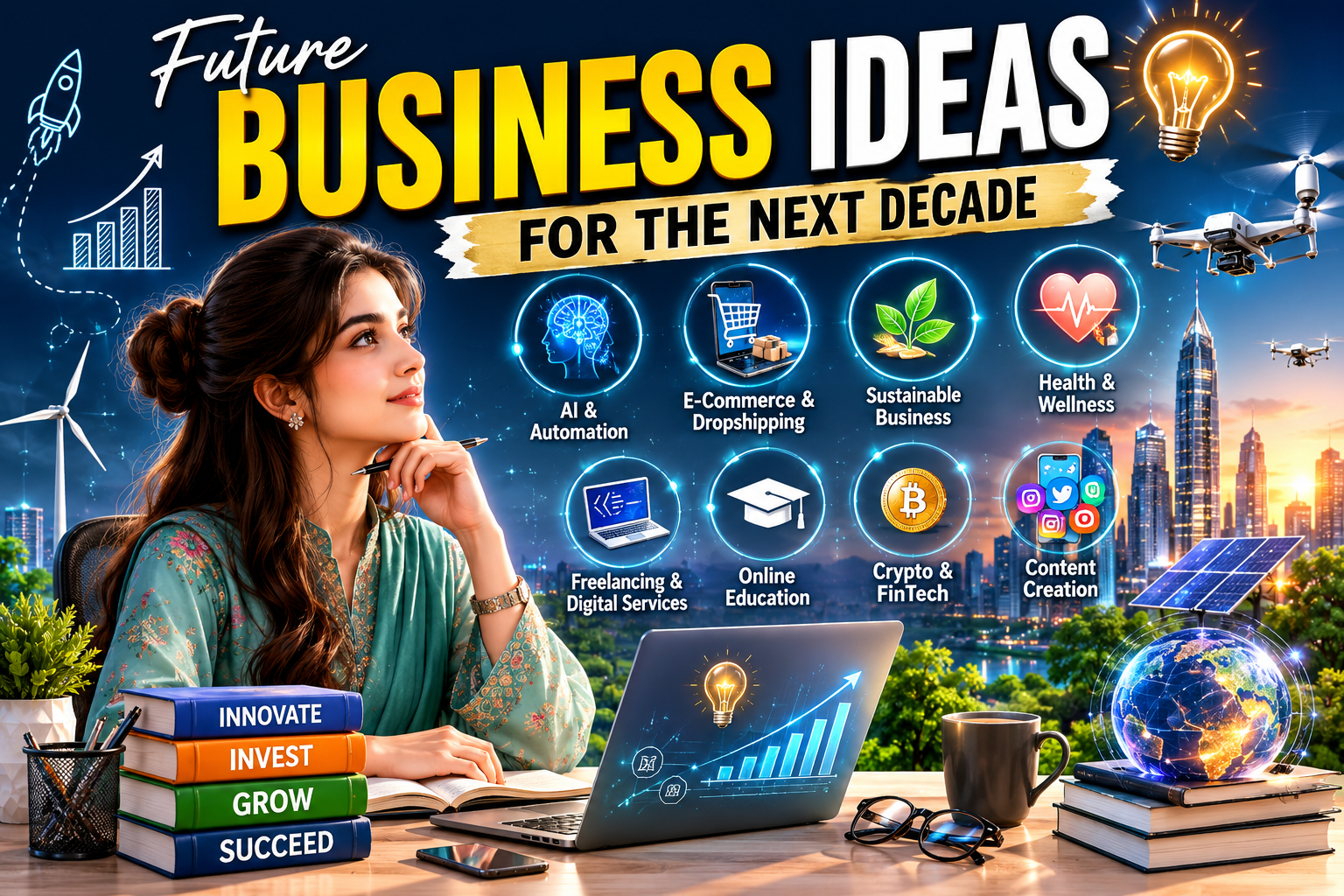
The global economy is undergoing a massive, structural transformation. If you look closely at how the market is moving, you’ll notice that the boundaries between industries are blurring. Technologies like artificial intelligence are shifting from experimental tools to baseline infrastructure, while the green economy is evolving from a compliance checkbox into a multi-trillion-dollar marketplace.
For entrepreneurs, startup founders, and freelancers, this structural shift represents a historic window of opportunity. The next decade won’t belong to those who build faster versions of yesterday’s businesses; it will belong to those who solve the highly specific friction points of tomorrow.
Whether you’re looking to launch a venture backed by venture capital or a hyper-focused solo service, positioning yourself ahead of these macroeconomic shifts is your path to sustainable growth. Let’s look at the specific, high-potential industries and business ideas poised to dominate the next decade.
Table of Contents
- The AI Ecosystem: Moving From Tools to Infrastructure
- The Green Economy: Decarbonization and Climate Adaptation
- Healthtech and Longevity: The Personalized Care Explosion
- B2B Micro-Infrastructure: The Future of Scalable Services
- The Decentralized Workforce and Creator Economy Support
- Key Takeaways for Forward-Thinking Entrepreneurs
- Frequently Asked Questions (FAQs)
- Conclusion: Actionable Steps to Get Started
The AI Ecosystem: Moving From Tools to Infrastructure
Global investment in AI is projected to reach massive thresholds as the technology integrates deeply into day-to-day operations. According to recent macroeconomic data from PwC, AI adoption is poised to add up to 15% to global GDP by 2035. However, the days of building simple wrappers around existing large language models are drawing to a close. The massive opportunities lie in governance, integration, and niche specialization.
Vertical AI Agents for Niche Industries
Instead of general-purpose assistants, the market demands hyper-specialized AI agents trained on proprietary, domain-specific data. These agents automate complex, multi-step workflows for industries that are historically slow to adopt software.
- Real-World Application: Consider an AI agent built exclusively for corporate compliance documentation or a specialized tool designed to handle immigration case filings for law firms.
- How to Build It: Partner with a domain expert (e.g., an immigration lawyer or a building inspector) to map out their most tedious workflow. Build a specialized software-as-a-service (micro-SaaS) platform that automates that specific chain of tasks while preserving human review oversight.
AI Implementation and Auditing Consultancies
Many small and mid-sized businesses (SMBs) know they need to integrate smarter automation to remain competitive, but they lack the in-house engineering talent to deploy it safely.
- Real-World Application: A boutique consultancy that audits an e-commerce brand’s supply chain or a local manufacturing firm’s inventory data, hooks up local predictive analytics tools, and trains staff on prompt engineering and model oversight.
The Green Economy: Decarbonization and Climate Adaptation
Sustainability is no longer just a regulatory burden—it is a core driver of modern consumer preference and enterprise spending. Driven by updated global climate targets and financial incentives like the tax credits provided under the Inflation Reduction Act, the transition to a circular and highly efficient economy is opening major commercial paths.
Commercial Green Building and Energy Audits
Commercial real estate owners and residential managers face intense pressure to reduce their carbon footprint, manage energy expenditures, and hit modern environmental benchmarks. According to reports from the U.S. Green Building Council, certified eco-friendly properties command transaction premiums up to 25% higher than traditional buildings.
- Real-World Application: A specialized consulting firm that performs drone-assisted thermal imaging and energy audits, outlining exactly how a property manager can retrofit their insulation, switch to smart HVAC configurations, and tap into clean energy incentives.
Reusable and Smart Circular Packaging Solutions
As consumer backlash against single-use plastics intensifies, the global reusable packaging market is climbing toward an estimated $190 billion valuation. Brands need logistics networks that can handle circular packaging models seamlessly.
- Real-World Application: Creating a regional, tech-enabled logistics system that supplies local restaurants or e-commerce brands with durable, trackable, and sanitizable containers, turning packaging from a disposable cost into a recurring service asset.
Healthtech and Longevity: The Personalized Care Explosion
An aging global population, combined with a cultural shift toward proactive, preventative wellness, is driving explosive growth in digital health and biotechnology. Healthcare delivery is migrating rapidly from centralized hospital settings straight into the home.
“Hospital-at-Home” Operations and Infrastructure
As traditional medical facilities face strain, healthcare providers are looking to shift stable, recovering, or chronic patients back to their homes using advanced remote patient monitoring (RPM) systems.
- Real-World Application: A logistics and technical support business that sets up medical-grade IoT monitoring equipment in patient homes, tests the secure connections, and provides 24/7 technical assistance to families and care teams.
Hyper-Personalized Nutrition and Preventive Health Platforms
Consumers are actively moving away from one-size-fits-all health advice. They want data-driven, individual routines based on continuous biological feedback.
- Real-World Application: A platform that pairs continuous glucose monitor (CGM) data or biomarker testing with specialized software to generate dynamic, automated meal plans and lifestyle protocols tailored to an individual’s unique metabolism.
B2B Micro-Infrastructure: The Future of Scalable Services
The software market is shifting toward lean, capital-efficient setups. Founders are looking to grow revenue without scaling their human headcount linearly. This has opened a massive opportunity for micro-SaaS products and highly automated, asset-light business infrastructure.
Micro-SaaS for Hyper-Specific B2B Problems
Instead of trying to build the next massive project management platform, look for microscopic, highly painful software gaps within popular enterprise ecosystems like Shopify, Salesforce, or HubSpot.
+---------------------------+       +---------------------------+
|   Broad Enterprise App    |  -->  |    Niche Micro-SaaS       |
|  (e.g., Global E-comm)    |       | (e.g., Local Tax Plug-in) |
+---------------------------+       +---------------------------+
- Real-World Application: A dedicated Shopify plug-in built solely to handle hyper-regional tax compliance rules for cross-border digital goods. Because it solves one specific, painful regulatory headache perfectly, businesses will happily pay a recurring subscription for it indefinitely.
Automated Cybersecurity and Trust Services
With decentralized networks and distributed teams becoming standard, securing data endpoints is a top priority for corporate operations. Small businesses, in particular, are looking for turnkey, accessible cybersecurity solutions.
- Real-World Application: Providing an all-in-one managed service that automates background credential checking, monitors company data leaks on dark web forums, and enforces clean access controls across all team apps.
The Decentralized Workforce and Creator Economy Support
The creator economy is projected to expand into a half-trillion-dollar industry, while freelance platforms continue to attract top-tier specialized professional talent. However, both creators and solo professionals face a massive operational bottleneck: they are creative engines buried in administrative work.
AI-Enhanced Content Repurposing Networks
Content creators, B2B marketers, and media companies produce massive amounts of long-form audio and video. Turning that raw content into multi-channel short-form clips, optimized text posts, and newsletters requires immense effort.
- Real-World Application: A high-end agency that uses advanced audio and video processing tools to ingest one long-form podcast episode and instantly output a structured bundle consisting of short-form clips, fully edited transcripts, and optimized LinkedIn and thread posts.
Specialized Niche Talent Marketplaces
Broad, general freelance platforms are increasingly crowded and noisy. The market is looking for highly vetted, vertical talent marketplaces that cater to specific high-skill niches.
- Real-World Application: A premium marketplace dedicated exclusively to pairing deep-tech companies with fractional, vetted data scientists or certified medical copywriters who understand strict regulatory compliance.
Key Takeaways for Forward-Thinking Entrepreneurs
To build a business that stands the test of time over the next ten years, remember these fundamental pillars of modern entrepreneurship:
- Focus on Deep Friction: The most profitable ideas emerge at the intersection of regulatory changes, shifting market values, and emerging technology.
- Prioritize Capital Efficiency: Leverage smart automation and AI tools early on to keep your initial operational overhead low and your profit margins healthy.
- Emphasize Human-Centric Skills: As routine tasks automate, fields requiring deep empathy, complex problem-solving, and trust—like specialized consulting and personalized health tech—become increasingly valuable.
- Build Early Defensibility: Protect your company from copycats by securing proprietary data partnerships, building deep domain expertise, or cultivating a highly engaged, trusted community.
Frequently Asked Questions (FAQs)
1. Do I need a technical background or a coding degree to launch an AI-driven business?
No. The rise of sophisticated low-code and no-code platforms, combined with accessible API frameworks, means your domain expertise and understanding of customer problems matter much more than your ability to write raw code from scratch. Your primary value lies in identifying a painful workflow gap and figuring out how to orchestrate existing technological solutions to bridge it.
2. Why is the green economy considered low-risk for new entrepreneurs?
Because it is heavily backed by global legislative changes, tax credits, and shifts in corporate procurement policies. Businesses and property owners are actively looking for solutions to avoid regulatory fines and lower operational costs, ensuring there is consistent, high-intent B2B demand.
3. What makes a micro-SaaS business better than a standard SaaS model?
Micro-SaaS businesses target a highly specific, niche user base with an absolute focus. Because the scope is narrow, they require significantly less capital to build, can be launched in a fraction of the time, and face far less competition from massive enterprise software giants.
4. How can a traditional service business adapt to these future trends?
By injecting automation and eco-friendly practices into your core model. For example, a traditional lawn care or landscaping service can shift to battery-powered equipment and native, drought-resistant landscape designs to instantly capture the high-end, climate-conscious market segment.
5. What industry is expected to grow the fastest over the next decade?
While AI acts as the overarching technological engine across all fields, the healthtech sector (specifically personalized longevity platforms) and the clean energy sector are seeing the highest rates of sustained capital investment and compounding consumer demand.
Conclusion: Actionable Advice to Get Started
The biggest mistake you can make when looking at future business ideas is falling into “analysis paralysis.” The future isn’t a distant wave you have to wait for; it is being actively constructed right now through small, iterative solutions.
If you want to build a highly successful, resilient venture over the next decade, choose one specific area of interest and take these immediate actions:
- Identify a highly specific friction point: Talk to five professionals in your target industry and ask them: “What is the most tedious, repetitive task that takes up at least two hours of your workday?”
- Validate the commercial demand: Before building anything, create a simple landing page outlining your proposed solution, or offer the solution manually as a high-end service to prove people will pay for it.
- Automate your backend early: Use modern workflow automation and AI infrastructure to handle your administrative work, keeping your focus completely on product quality and direct customer acquisition.
The economic landscape of the next decade will reward the agile, the focused, and the deeply human. Find your niche, solve a real problem, and start building today.
Promotional Materials
Featured Image Generation Prompt
A professional, minimalist flat-lay concept or a wide-angle photograph of a modern, clean workspace. The desk features a sleek laptop displaying clean data visualizations and abstract network nodes on screen. Next to the laptop sits a small, vibrant green terrarium plant, a modern smartphone, and a neat notebook. The lighting is bright, natural, and inviting, symbolizing innovation, sustainable technology, and future business strategy. No text or low-quality stock elements.