
Please wait…
You are being securely transferred to our partner site.
seconds remaining
If you are not redirected automatically, click here to proceed.
Today's hyper-competitive digital marketplace, products, features, and pricing models can be easily duplicated overnight. The one thing your competitors cannot easily copy is the authentic relationship you build with your audience.
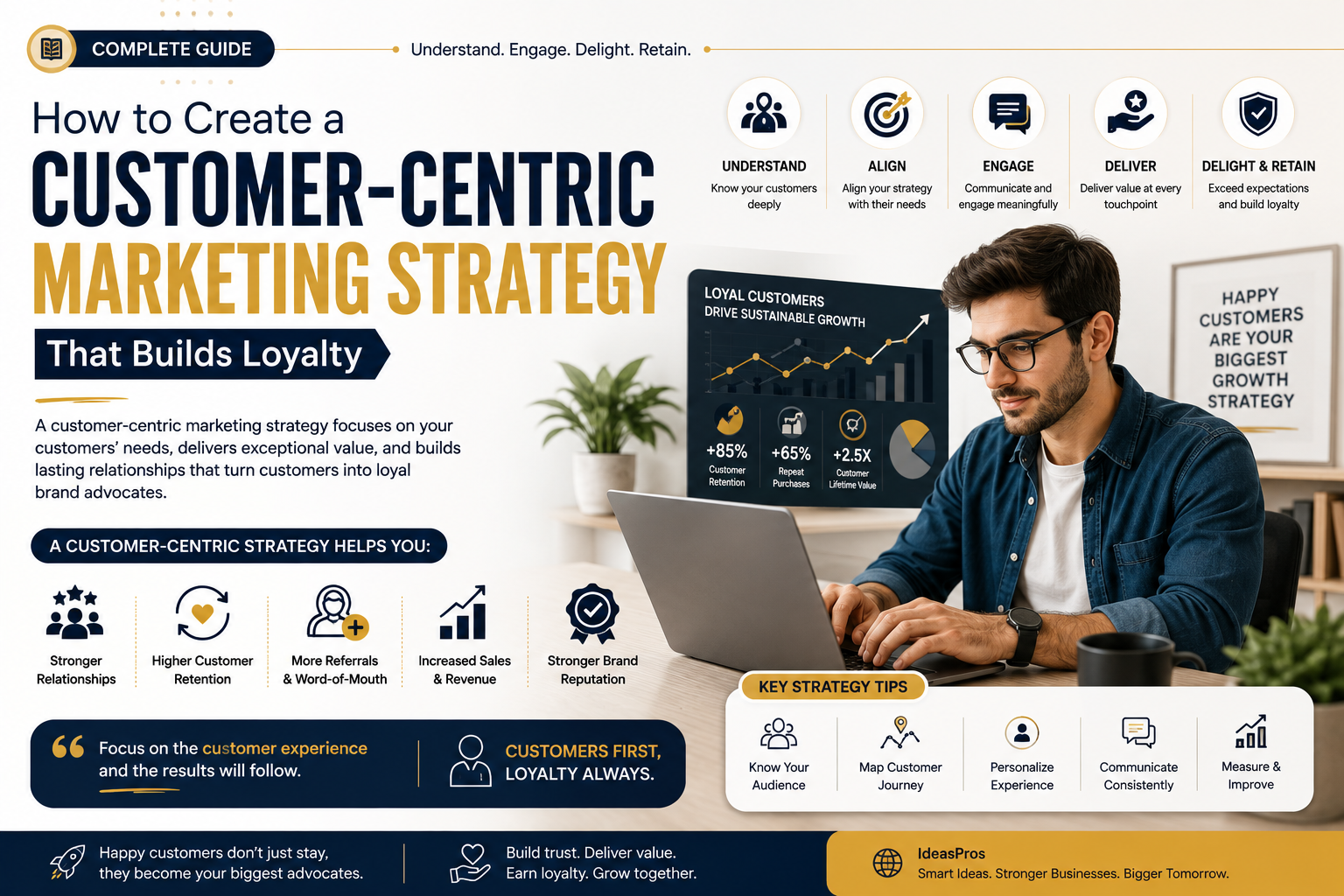
Modern consumers are no longer persuaded by aggressive sales pitches or intrusive banner ads. They demand personalized experiences, genuine transparency, and brands that put their needs first. This shift requires a foundational change from traditional, product-focused marketing to a customer-centric marketing strategy.
Transitioning to a customer-centric model does more than increase brand affinity; it drives long-term profitability, lowers acquisition costs, and turns casual buyers into brand advocates.
1. What Is Customer-Centric Marketing?
At its core, customer-centric marketing is a business strategy that places the customer at the center of every marketing decision, campaign, interaction, and product initiative. Instead of asking "How can we sell more of our product?", a customer-centric company asks "How can we solve our customer's problem more effectively?"
[ Product-Centric Approach ] ➔ Focus: Selling Products ➔ Goal: Short-Term Sales Transactions
[ Customer-Centric Approach ] ➔ Focus: Solving Problems ➔ Goal: Long-Term Customer Value (CLV)
Key Differences: Product-Centric vs. Customer-Centric
| Dimension | Product-Centric Marketing | Customer-Centric Marketing |
|---|---|---|
| Core Focus | Highlighting product features, specs, and price points | Understanding customer pain points, goals, and emotions |
| Primary Goal | Single-transaction volume and short-term revenue | Customer Lifetime Value (CLV) and retention |
| Messaging | Company-focused ("We build the fastest software") | User-focused ("Achieve your goals in half the time") |
| Feedback Loop | Reactive (handling complaints after the purchase) | Proactive (gathering continuous input to improve experience) |
| Success Metric | Conversion rates and immediate sales volume | Retention rates, Net Promoter Score (NPS), and repeat sales |
2. Why Customer-Centricity Matters for Business Growth
Adopting a customer-centric strategy is not just a branding exercise—it directly impacts your bottom line through three core mechanisms.
A. Maximizing Customer Lifetime Value (CLV)
Customer Lifetime Value measures the total revenue a business can expect from a single customer relationship over time. Acquiring a new customer can cost anywhere from 5x to 25x more than retaining an existing one. By focusing on customer satisfaction and long-term relationships, you boost repeat purchases and organically grow CLV without increasing your paid advertising budget.
B. Lowering Customer Acquisition Costs (CAC)
When your existing customers feel valued, they naturally become brand advocates. Organic word-of-mouth marketing, positive online reviews, user-generated content, and direct referral links reduce your reliance on expensive pay-per-click (PPC) ads, steadily driving down your Customer Acquisition Cost (CAC).
C. Building Sustainable Competitive Insulation
Products come and go, but strong customer relationships create a protective moat around your brand. When customers feel a deep emotional connection and high level of trust, price hikes by competitors or temporary product glitches won't cause them to leave.
3. The 5 Pillars of a High-Converting, Customer-Centric Strategy
To build a customer-centric marketing strategy that lasts, structure your efforts around five foundational pillars.
[ Deep Research ] ➔ [ Data Personalization ] ➔ [ Value Content ] ➔ [ Omnichannel UX ] ➔ [ Active Feedback ]
Pillar 1: Deep Customer Research & Audience Segmentation
You cannot center your strategy around the customer if you don't truly understand who they are. Surface-level demographic data (age, location, gender) is no longer sufficient.
- Psychographic Profiling: Identify your customers' deep-seated motivations, personal values, career goals, daily fears, and underlying frustrations.
- Behavioral Segmentation: Group your audience based on actual interactions—such as browsing history, past purchases, email engagement levels, and content consumption preferences.
- Qualitative Interviews: Conduct one-on-one discovery calls with your top 10% most loyal customers to discover why they chose your brand over alternatives.
Pillar 2: Personalized Experience Across the Customer Journey
Personalization extends far beyond using an automated {First_Name} tag in an email subject line. Modern personalization means delivering the right content, offer, or recommendation at the exact right stage of the buyer's journey.
- Dynamic Web Content: Show different homepage banners or recommended products based on whether a visitor is a first-time guest or a returning subscriber.
- Lifecycle Email Flows: Differentiate your messaging. A new subscriber needs educational onboarding content; a repeat customer should receive exclusive rewards or VIP previews.
Pillar 3: Value-First Content Marketing
Stop treating content as a direct sales pitch. A customer-centric content strategy treats content as an educational resource designed to empower your audience—even before they hand over a credit card.
- In-Depth How-To Guides: Help users solve tangible problems related to your industry without demanding an immediate purchase.
- Transparent Comparison Articles: Publish honest product comparisons that clearly outline who your solution is for—and who it isn't for.
- Case Studies & Community Highlights: Focus your customer stories on the customer as the hero, positioning your product merely as the tool that helped them succeed.
Pillar 4: Seamless Omnichannel Experience
A customer should receive a consistent, frictionless brand experience regardless of where they interact with you—whether on desktop, mobile app, social media, or via customer support chat.
- Unified Customer Data: Ensure your CRM tracks customer interactions seamlessly so they never have to repeat their issue to multiple support agents.
- Cross-Channel Messaging Consistency: Maintain the same visual identity, tone of voice, and brand promises across Instagram, email campaigns, and support channels.
Pillar 5: Proactive Feedback Loops & Open Dialogue
A truly customer-centric brand doesn't just broadcast messages—it listens. Make customer feedback a core operational input.
- Net Promoter Score (NPS) Surveys: Regularly measure how likely customers are to recommend your product to a peer.
- Social Listening: Monitor social media conversations, reddit threads, and review sites to capture unfiltered customer sentiment.
- Product Co-Creation: Involve your loyal customer base in voting on new features, testing beta releases, or selecting future product variations.
4. Step-by-Step Execution Plan
Ready to put this strategy into action? Follow this four-phase implementation roadmap.
Phase 1: Map the Complete Customer Journey
Map out every touchpoint a customer experiences from the moment they discover your brand to post-purchase advocacy:
- Awareness Stage: How do they find you? (Search, social media, word-of-mouth)
- Consideration Stage: What questions or objections do they have before buying?
- Decision Stage: What friction exists on your checkout or sign-up page?
- Retention Stage: How do you onboard them and keep them engaged long-term?
Phase 2: Align Internal Teams Around the Customer
Customer-centricity cannot live solely within the marketing department. Sales, product development, customer success, and leadership must align on customer-first principles. Break down internal silos so customer insights flow freely between teams.
Phase 3: Implement Post-Purchase Nurture Campaigns
The sale isn't the end of the customer journey—it's the beginning. Build post-purchase email sequences that include:
- Clear onboarding instructions and video walk-throughs.
- Proactive tips to help buyers extract maximum value from their purchase.
- Timely check-ins asking if they need help or support.
Phase 4: Recognize and Reward Loyalty
Acknowledge repeat customers explicitly. Create a structured loyalty program, offer surprise free gifts, or launch an exclusive VIP community to show long-term appreciation.
5. Key Metrics to Measure Strategy Success
Tracking the right metrics ensures your customer-centric strategy yields real financial return.
- Customer Lifetime Value (CLV):CLV=Average Order Value×Purchase Frequency×Average Customer Lifespan
- Net Promoter Score (NPS): Evaluates overall customer loyalty and satisfaction on a scale from -100 to +100.
- Customer Retention Rate (CRR): The percentage of customers who remain active over a specified timeframe.
- Churn Rate: The percentage of customers who stop doing business with you over a given period.
- Customer Effort Score (CES): Measures how easy it is for a customer to complete a transaction, get support, or resolve an issue.
Final Thoughts
A customer-centric marketing strategy is not a temporary marketing campaign or a quick hack—it is a long-term operational commitment. By genuinely prioritizing your audience's needs, creating value-driven content, reducing friction across touchpoints, and continually acting on feedback, you build more than just a customer base. You create an army of loyal brand advocates that fuel sustainable, long-term business growth.